Your cart is empty.


Your cart is empty.
Festival City Stories 11 Jul 2024

Where the ‘Weirdos’ Have Their Moment
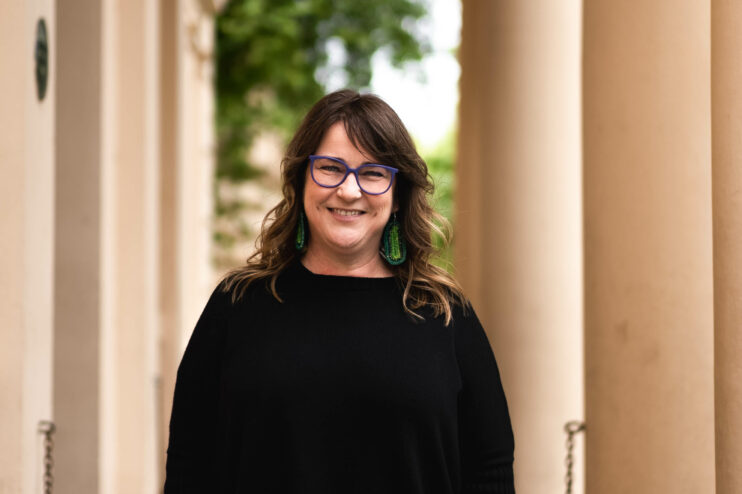
From rough and raw DIY cabaret performances in East London pubs to mainstage musicals and major solo commissions, Victoria Falconer is a composer, performer and advocate who has experienced every corner of the festival world — and every rung of the ladder.
But the high-flying, budget-defying world of cabaret wasn’t Falconer’s first home. Growing up in on a 350-acre farm in rural Gippsland, her first taste of live performance didn’t come from theatre or musicals, but the “eisteddfod culture” that once thrived in regional towns.
“It’s so unique to Australia,” Falconer explains. “You knew that there was this one week in the year where every class in every school would prepare a song, and they would get out the costumes and the sequins, all hand-sewn, and the smell of hairspray as somebody else’s mum pulled your hair back and almost made you cry with the pain. But you just did it because you had to — just 50 ten-year-olds tap-dancing.
For “artsy” kids like Victoria, these events were a rare and formative outlet. “There’s really nothing like it; in community halls and old theatres, this was the one big event that happened for anybody who was artsy in the country. If you’re trying to do weird arts stuff, there’s not many places where you fit, where you feel like you fit, and I think the eisteddfod and the scene around that was one of those places.”
Falconer might have left the Victorian eisteddfod circuit behind, but it shares common DNA with the international festival community she now thrives in from Edinburgh to Adelaide.
“I really cut my teeth on the Fringe festival scene,” she says. “I guess I felt that same feeling, like I was at home. Like I’d come home, and it was the same sequins – easier to wear this time – the same smell of hairspray. And it’s not somebody’s mum pulling my hair back, but some drag queen.”
For many years Falconer was based in London, performing in double act EastEndCabaret and taking tentative steps into East London’s “low budget, lo-fi” scene. But it was a trip to Edinburgh Fringe that introduced her to an international festival circuit and a community through which she could build a life and career.
“It enlarged my world. In my life, the most important people are people that I would have met through festivals. You know, you talk about the logical family instead of your biological family; I love my biological family, but I definitely feel that same sort of connection with people that I see in festivals year round.”
But while Falconer found a sense of home and community, it wasn’t always easy — particularly as one of few women of colour onstage.
“For a long time, I lived between kind of the fringy, cabaret, drag, sequin world and the comedy world, and when we look a certain way, [people asked] ‘Why are you doing that?’ And so the people – let’s say gatekeepers, that’s what it is – it took them a while to come around. And then they realised that that’s what the people wanted so we became a lot more popular.”
Falconer says this cyclical nature of boundary-pushing and making space is what makes festivals such a vital forum for exposing audiences to new ways of performing, and different kinds of performers.
“I do think that the reason that I am being booked for these musicals or for these theatre productions is because of my background; [it’s] because I was brought up in carnie land, where you can make something work on the smell of fairy floss and popcorn.
“The weirdos had their moments. Every arts movement, probably every decade that humans have tittered around onstage, the weirdos will get the look-in and they become mainstream and then the new weirdos feel like they’re left out and it’s kind of that cycle.
“But I think the main challenge is to show people that festivals are about putting everybody onstage, and that it doesn’t matter whether you are open access or whether you’re curated, whether you run for a month, a week or a day. Your responsibility if you have this kind of a platform, is to put everything on.”
When Falconer started, she felt she was one of the only women of colour performing Cabaret. Now, she wants to help those who don’t see themselves represented on stage feel empowered to step onto it. In 2020, she helped establish The People of Cabaret, an initiative aimed at supporting and promoting First Nations and people of colour working in cabaret and related disciplines.
“I have had people from audiences in shows, come to me and say, ‘I had no idea that somebody that looked like me could do what you do onstage’.
“Now I guess my focus changing what festivals are, and feeding into the structure and giving feedback to the people who run the festivals, and shaping it so that the next me that comes along — a little nerdy music eisteddfod kid from the country — feels like they’re able to come in and make it their world as well.”
_________________________________________________________________________________________
This article is part of the Festival City Stories series, a collection of reflections about Adelaide made by the people who make this a festival place. The project was funded through the Department of Premier and Cabinet, Arts South Australia, Arts Recovery Fund, and delivered in partnership with the State Library of South Australia.
Written by: Walter Marsh
Photography by: Sia Duff