Your cart is empty.


Your cart is empty.
Festival City Stories 11 Jul 2024

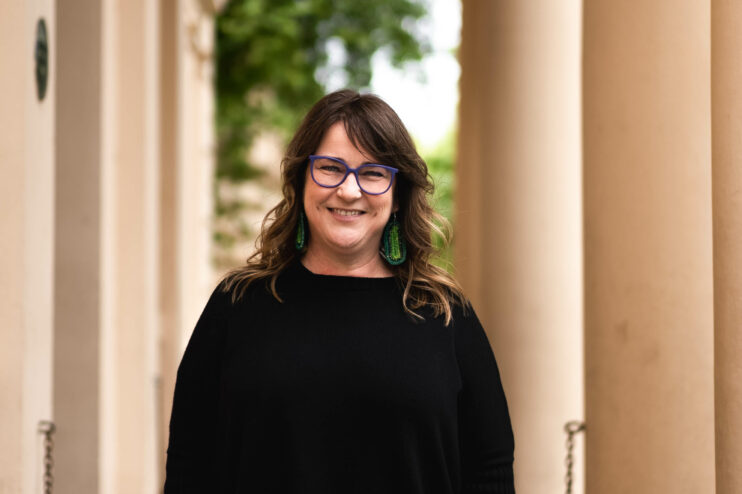
Growing up traipsing through the Arrernte bushlands of Alice Springs, Beatrice Jeavons went onto study Tourism and Event Management at the University of South Australia. Years spent grape-picking, travelling overseas, working in outdoor education and helping her cousin out at Adelaide Festival’s old Lola’s Pergola and the Barrio all magically melded together, bringing her into the very niche and much-needed field of arts sustainability. For her, the pairing is obvious.
She likens festivals to tiny cities, where we’re amassing the same kinds of waste – landfill, overproduction, transport pollution – but because festivals are containable spaces, they end up being visibly confronting examples of what we, as a consumable society, need to work on. Daunting, but she sees it as a positive, ‘like a way that we can trial some of these solutions.’ She mentions the Glastonbury Festival, which provides composting toilets for hundreds of thousands of people. ‘From a water reduction and waste perspective that’s the kind of solutions I like to see trickle out into the rest of the community.’ And she’s making it happen. Together with former Adelaide Festival Executive Director Rob Brookman, Beatrice helped the Festival become carbon neutral.
As a sustainability consultant and creative producer working within the arts and cultural sector, Beatrice says it’s the people’s voices that can drive change in climate advocacy, and when the platform is an arts festival, ‘it makes the messaging a bit more sexy so people feel like they can take action.’ Using Fringe as an example, she says that it’s really up to the festival producers to say to the numerous independent venues participating, ‘This is the journey we’re heading on, can you help us? Have you tackled this challenge before? Can we tackle it together?’
Because climate change is a global issue, it means we’re a shared collective, so ‘talking about that and opening a space for collaboration and resource sharing I think is really important.’ This spans discussions on green energy and waste management to choosing major sponsors. ‘I feel like we’re really at this tipping point where, I mean, every job needs to be a climate job.’
When it comes to climate solutions, Beatrice feels artists, in general, are not only woke to world issues, but they’re the makers of a ‘cathartic release of what’s going on in the world so they’re kind of at the forefront of that thinking.’ This means they’re in a place of enormous privilege, as are the festivals who present their work. WOMAD, she feels, is exemplary in this way, citing two dollars from every ticket going toward Greening Australia.
‘There’s no need to reinvent the wheel,’ she says of this initiative. ‘If someone’s done something and it’s worked, just copy that exact thing.’
De-growth seems a solid solution to sustainability when thinking about international and interstate transportation to our city’s festivals, but it’s not an easy sell to producers or governmental bodies. Beatrice believes fostering more local talent could be a way forward, because ‘there’s value to celebrating a place.’ This goes for prioritising local wine and produce, and being the wine capital of the nation, in Adelaide this should be a given.
Happy to point out South Australia was the first state or territory to ban single-use plastics being handed out freely at grocery stores, she’s confident we can build on that and be a beacon to others. ‘We’ve got this history of being a bit of a trailblazer in some of these kind of forward-thinking capacities. So if we bring that amazing rich arts and cultural scene with this kind of forward-thinking environmental/ climate action capacity, I would love South Australia someday to be the state that had this collective climate action commitment or we all had a public statement of these shared goals in line with what the science is saying and the UN’s sustainability goals.
And if we had that reputation of, “Oh, South Australia’s really good at that,” then – and we can share that with the rest of Australia and the world – then, you know, I think it’s exciting.’ The fact that there’s so much work to be done doesn’t deter Beatrice’s hopefulness. ‘It’s nice to be in a collaborative, nurturing city,’ she says, and that’s got to be good place to start. That, and tackling ‘other challenges like zip ties,’ she laughs. Challenge set.
_________________________________________________________________________________________
This article is part of the Festival City Stories series, a collection of reflections about Adelaide made by the people who make this a festival place. The project was funded through the Department of Premier and Cabinet, Arts South Australia, Arts Recovery Fund, and delivered in partnership with the State Library of South Australia.
Written by: Heather Johnson
Photography by: Chi Catalano